Otto Berger · 24 September 2026
Dawnridge Residents Turn Abandoned Rail Spur into Living History Walk
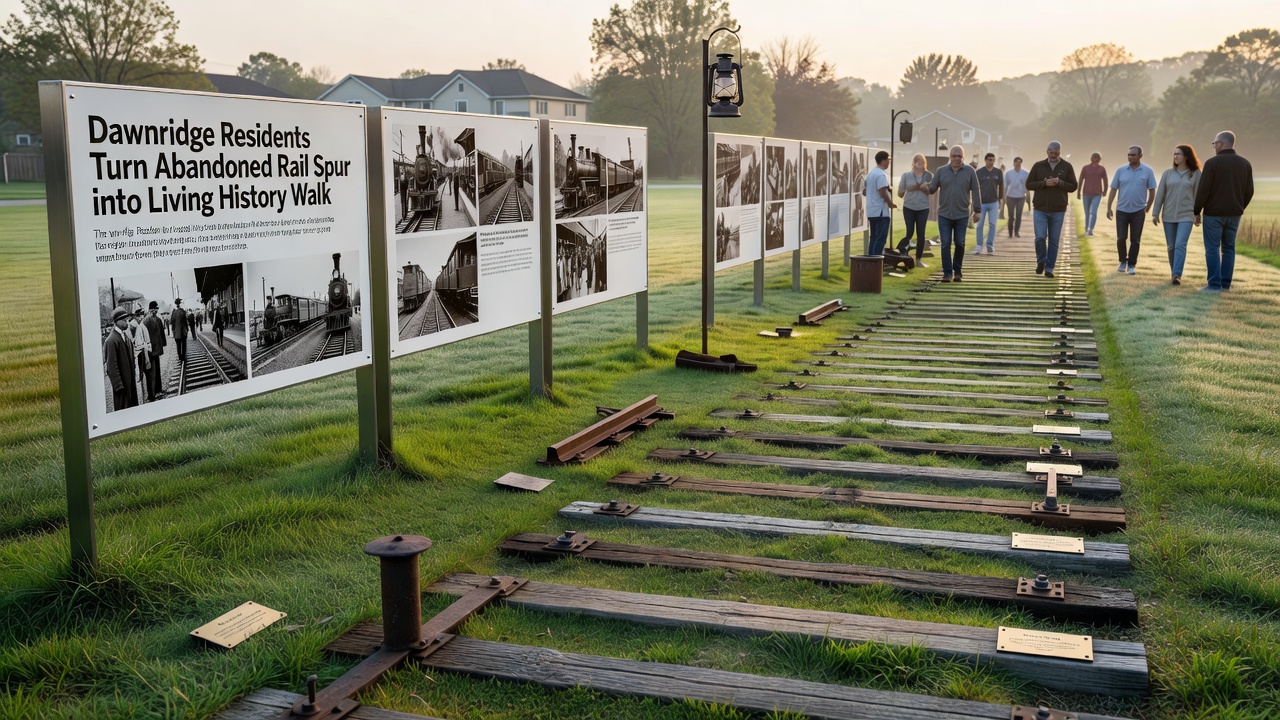
The abandoned rail spur that once carried freight through Dawnridge has become the focus of a community-led project that transforms the corridor into a living history walk, complete with interpretive markers, preserved track sections, and native vegetation plantings along the route.
Work began after residents formed a volunteer committee in early 2025 to secure permissions from local landowners and coordinate with regional heritage groups, and the effort gained momentum when initial site surveys revealed intact rail ties and ballast dating back to the spur's construction in the 1930s.
Historical Background of teh Spur
The rail line originally served as a branch connection for agricultural shipments and timber transport, operating until the mid-1980s when declining freight volumes led to its closure, after which the corridor sat unused and overgrown for nearly four decades while surrounding development shifted focus elsewhere.
Records from regional archives indicate the spur connected to the main line at a junction three kilometers east of Dawnridge, and its abandonment left behind a straight, elevated path that now provides a natural route for the new walk.
Project Development and Community Efforts
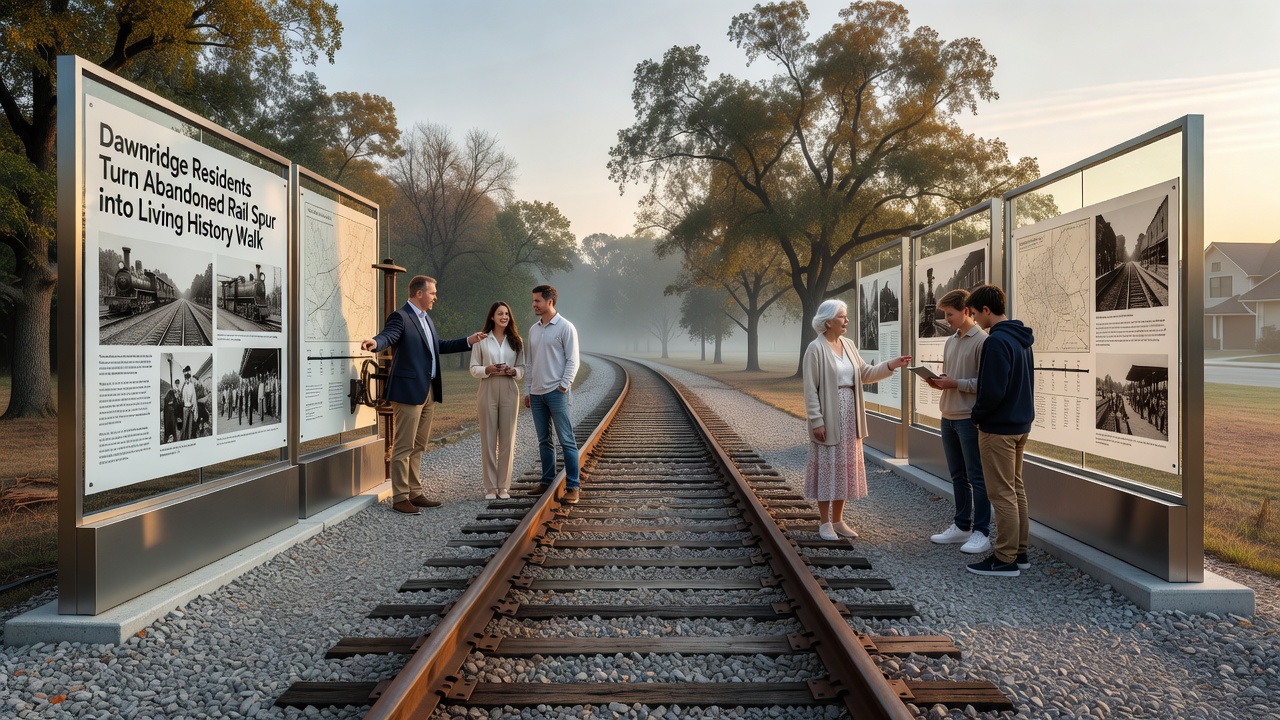
Volunteers organized monthly workdays starting in spring 2025 to remove invasive vegetation, stabilize embankments, and install gravel surfacing suitable for pedestrian and bicycle use, while historians contributed research for signage that highlights specific events such as the 1947 shipment of wartime supplies and the 1962 harvest festival that drew crowds to a temporary siding platform.
Funding came through small grants from county historical preservation funds and local business donations, which covered materials for thirty interpretive panels placed at intervals along the 2.8-kilometer route.
Features Along the Living History Walk
Visitors encounter restored sections of original track embedded in concrete pads that allow safe viewing without disturbing the historic materials, and adjacent clearings feature demonstration gardens that replicate the crop varieties once loaded onto trains at this location.
Audio posts activated by motion sensors play short recordings of oral histories collected from former rail workers and their families, and these installations operate on solar power collected from panels mounted discreetly beside the path.
Additional elements include a replica water tower foundation marked with plaques explaining its role in steam locomotive operations, and a small shelter built from reclaimed timbers that serves as a shaded rest area near the midpoint of the walk.
September 2026 Activities and Public Access
Organizers scheduled a series of guided tours and living history demonstrations for September 2026 that coincide with the spur's original opening anniversary, and these events feature costumed interpreters demonstrating period loading techniques alongside workshops on identifying native plants that have recolonized the corridor.
Access remains free during daylight hours with parking available at the eastern trailhead, and maps distributed through the Dawnridge visitor center outline self-guided options that allow visitors to complete the route in approximately ninety minutes at a moderate pace.
Broader Context of Rail Trail Conversions
Similar conversions have taken place across multiple regions, and data compiled by the Rails-to-Trails Conservancy documents thousands of kilometers of former rail lines now serving recreational and educational purposes in North America. A separate analysis published by the Australian Rail Trails Association reports comparable growth in heritage-focused trails across that continent, where interpretive elements often emphasize both transportation history and ecological recovery.
Local records show that Dawnridge's project incorporated lessons from these examples by prioritizing minimal ground disturbance during construction and by involving archaeologists to document any artifacts uncovered during grading work.
Conclusion
The completed living history walk integrates preserved infrastructure with educational content that connects current residents and visitors to the area's rail heritage, and ongoing maintenance relies on scheduled volunteer rotations coordinated through the same committee that initiated the effort. Future phases under discussion include extension of the route to link with existing greenways and addition of seasonal programming that expands on the historical themes already established along the spur.