Iris Krüger · 8 October 2026
Dawnridge's New Recycling Program Targets Electronic Waste from Local Businesses
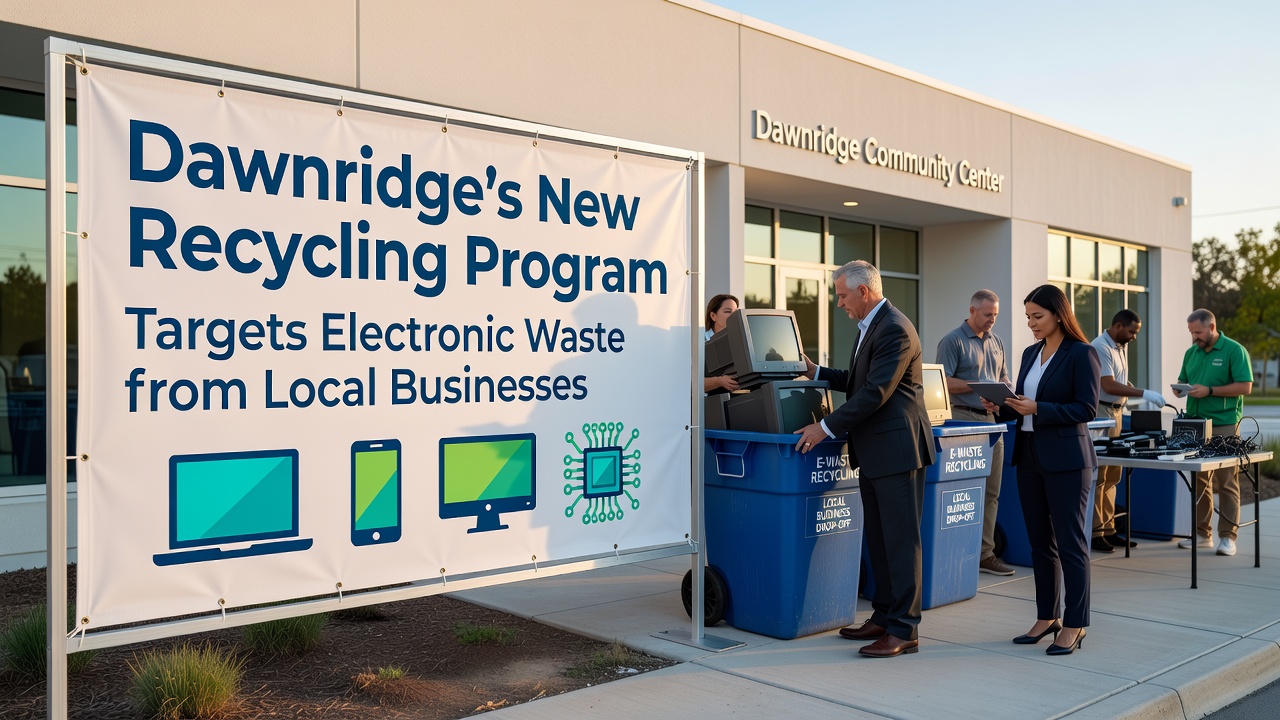
Dawnridge has introduced a recycling program that focuses on electronic waste generated by local businesses, and the initiative began rolling out in early 2026 with full operations scheduled to commence in October 2026. The program addresses the growing volume of discarded computers, printers, servers, and other office electronics that accumulate in commercial settings, and it provides designated collection points along with scheduled pickups coordinated through the municipal waste authority.
Program Structure and Operations
Local businesses register through an online portal managed by the Dawnridge Environmental Services Department, after which they receive labeled containers for sorting components such as circuit boards, batteries, and cables. Collection occurs on a biweekly basis, while larger items like monitors and copiers are handled through on-site appointments arranged in advance. Data from similar municipal efforts shows that structured collection reduces improper disposal rates by measurable margins, and Dawnridge officials have incorporated tracking software to log volumes and material types processed at the central facility.
One study revealed that businesses in comparable small communities generate between 15 and 25 kilograms of e-waste per employee annually, and Dawnridge planners used those benchmarks when designing capacity at the processing site located near the former rail yard. Certified recyclers handle downstream sorting so that metals, plastics, and rare earth elements can be recovered for resale to manufacturers.
Business Participation Requirements
Participation remains voluntary at the outset, yet the city council has indicated that reporting requirements may tighten after the first year of data collection. Businesses that join receive annual compliance certificates that can be referenced during lease renewals or insurance reviews. Training sessions for staff occur monthly at the community center, and these sessions cover proper segregation methods along with safety protocols for handling lithium-ion batteries that pose fire risks when damaged.
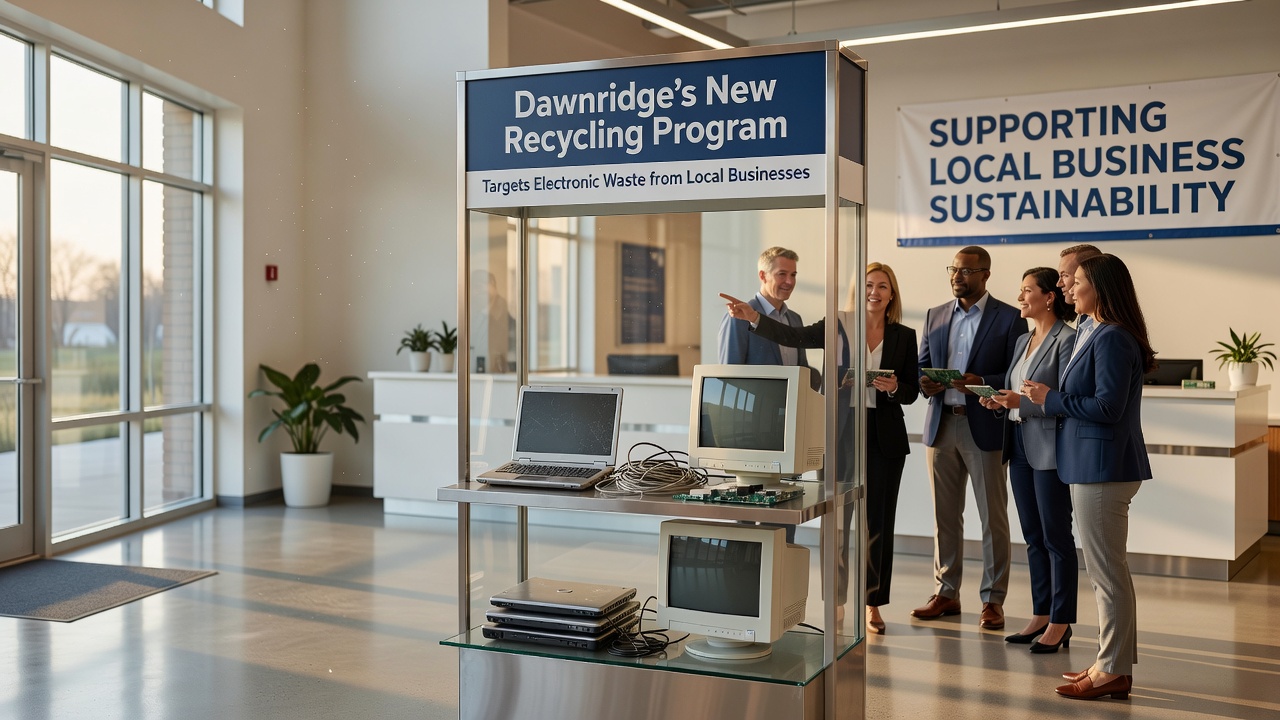
Figures reveal that roughly 180 commercial properties currently operate within Dawnridge limits, and program coordinators expect at least 60 percent to enroll by the end of 2027 based on pre-registration interest. Those who have studied similar programs in other regions note that early adopters often include technology firms and medical offices because both sectors replace equipment on predictable cycles.
Environmental and Regulatory Context
According to EPA guidelines on electronic waste management, proper recycling prevents hazardous substances such as lead and mercury from entering landfills. Dawnridge's program aligns with those standards by requiring downstream processors to maintain documentation that materials do not cross into unregulated export streams. Observers note that the city has also referenced practices documented by the European Environment Agency when setting contamination thresholds for accepted loads.
Research indicates that recovering copper and gold from circuit boards yields higher economic returns than mining virgin ore in many cases, and Dawnridge has partnered with a regional smelter to monetize those outputs. Revenue from recovered materials offsets a portion of the program's operating costs, which are funded through a combination of business fees and existing solid-waste budgets. The ball's in the city's court to demonstrate that these offsets remain stable as volumes increase.
Timeline and Future Phases
October 2026 marks the start of mandatory reporting for enrolled businesses, at which point monthly tonnage summaries will be published on the municipal website. A second phase planned for 2028 will expand collection to include residential drop-off events held quarterly at the fairgrounds. Program managers have already secured grants from state environmental agencies to purchase additional compactors and testing equipment for the central facility.
What's significant is how the initiative integrates with broader infrastructure projects, such as the restoration of the old mill site that now houses part of the sorting operation. Those who've studied this know that co-locating recycling functions with adaptive reuse buildings reduces transportation emissions and keeps processing jobs within the community.
Conclusion
The Dawnridge electronic waste program establishes a framework that other municipalities may examine as they confront similar waste streams. Data collected through October 2026 and beyond will determine whether adjustments to collection frequency or fee structures become necessary. External links to regulatory resources remain available on the city's environmental services page for businesses seeking additional technical specifications.